Tuesday, March 3, 2015

Isaak Morin's Supplemental Post #2 An interview with John Terzian


Today I interviewed entrepreneur John Terzian, a USC alumni who owns famous venues like Shore Bar, Bootsy Bellows and Hooray Henry's. The interview regarded his background, entrepreneurial philosophy and his his strategy in keeping his places relevant. 

John, son of two succesful lawyers,  studied entrepreneurship and communication at USC. Although his professional career started a little bumpy, he worked everything out and started to become profitable after learning from a few of his failures. He said that his places success in large was due to him having celebrity friends while growing up. He said that he would invite them to the places he opened and crowds would naturally go wherever the celebrities went. He also attributed his success to his work ethic and emphasis of hospitality at his places. He also mentioned the importance of staying relevant, and how he went about doing so. When we asked him he said that he pays close attention to fashion, art, and music, because he feels they control people's tastes and where and when they will spend their money. 

This is extremely relevant to the William A. Brown article on Audrey Hepburn, in that it also suggests that mediums such as fashion and film/music have a large effect on the consumption of society. Celebrities play a big part in that they are opinion leaders, and have large followings that can help businesses like John's when they are seen partying at his places.

Bootsy Bellows (Below)


Monday, March 2, 2015

Arabella Weston-Smith Core Post 3: Brown's article on Audrey Hepburn and Funny Face

I found William Brown's article "Audrey Hepburn: The Film Star as an Event" explained a lot of what we saw in "Funny Face" last week. Brown discussed how the fashion and film industries came together in the 1950s, and celebrated the "refeminization" of fashion through film (131). "Funny Face" focused a lot on celebrating the feminine, fashionable woman--centering on Hepburn's character's transformation into one.
Brown wrote about how the two industries supported each other by exploiting each other. This could not be more evident in "Funny Face." Beyond simply the story line being set around an ordinary girl flying to Paris to become the face of a designer's exclusive new season, the high fashion is supported through the modeling of every single outfit, multiple times. Fashion does not take a backseat role in the film--rather, high fashion is a lead role alongside Audrey Hepburn. The clothes and industry are just as important to the story and the character development as the main characters are.
Brown also writes about transatlantic tourism as a factor in the emergence of Audrey Hepburn as a star. As "Funny Face" is set in Paris, it could not support Brown's assertion more. "Funny Face" supports Hepburn's classification as the "continental" star (133). She is unique, fashionable, and independent--the "gamine" woman. Brown writes: "Furthermore, her independence is reinforced by the sense that none of Hepburn's characters never has to work. In a manner that ties Hepburn's screen persona to the expanding tourism industry of the 1950s...Hepburn is associated both with not working, and more positively, with holidays" (135). Ultimately, it seems that Hepburn's role in "Funny Face" perfectly captures the aspects that Brown believes contributed to Hepburn's emergence as a star. Consumerism, tourism, and the new definition of the ideal woman align perfectly in Hepburn's character in "Funny Face," Jo Stockton.

Marilyn Monroe, Audrey Hepburn, and Staring at White Women (Core)

Audrey Hepburn in Funny Face proves an interesting contrast to Marilyn Monroe in Gentlemen Prefer Blondes. The movies actually share a great deal of similarities; in no particular order:

- they both involve a trip to Paris
- they are both musical rom coms about a woman who might not get the one man she loves
- they both feature a buddy element
- Monroe and Hepburn both play women who are social outliers
- both Hepburn and Monroe get a featured dance number
- both involve a song and dance to escape through a crowd (at a cafe in Gentlemen Prefer Blondes and at the professor's house in Funny Face)
- they both tell the story of a woman who's true value is recognized and validated at the end via marriage

HOWEVER, despite being very similar films, the treatment of Monroe and Hepburn is night and day.

Hepburn's Jo is an intellectual. She is a quality girl (literally dubbed so in the film). She is classy, sophisticated, and unconcerned with materialism. She is presented in style as elegant, delicate, ladylike, high brow, etc.

Monroe's Lorelei is a dumb blonde showgirl. She is a quality-less girl--she grew up poor in Little Rock, she is alluded to having a shameful past (not a virgin), and her fiance's father is actively against her as a daughter-in-law. She is classless, unsophisticated, and a gold digger obsessed with diamonds. She is presented in style as voluptuous, sexy, flashy, immodest, etc.

When Monroe dances in Gentlemen Prefer Blondes, it is all wiggles and T&A. In Funny Face Hepburn is given a cerebral, modern-style dance.


And in relation to our reading in Heavenly Bodies, Monroe's "vaginal" (57) body and dress are once again opposite to Hepburn's much more structured, contained wardrobed.


However, in this same reading, we can find the thing that links both characters:

"The smart woman will keep herself desireable. It is her duty to herself to be feminine and desirable at all times in the eyes of the opposite sex." (Heavenly Bodies, 42)

Both Lorelei Lee and Jo Stockton are on a quest to be viewed by their respective man as the ideal--the object to be desired. They both are literally put on stages as a showgirl and model respectively to be gazed upon. And they both succeed, in very different ways and on very different terms, in entrapping a man by having him look at her enough. 

In the reading the idea of being an object of men's gaze and of desire gets more specific in a way which I think can connect these characters further and even extend that connection to other representations of femininity in Hollywood and beyond. Heavenly Bodies describes how "the white woman is offered as the most highly prized possession of the white man, and the envy of all other races" (HB, 43). Certainly the platinum blonde Monroe and the British waif Hepburn are White Goddesses. We have seen the white goddess to some degree in all the films, but the most pronounced of all was in The Sheik. In that film, Lady Diana Mayo's whiteness attracts not only Valentino but every ethnic man in the desert! 


But this white goddess as the object of gaze has an even more unabashed example. The readings mentioned a quote from Bus Stop, "Look at her gleaming there so pale and white," which immediately reminded me of Oscar Wilde's Salome.

Salome may be the greatest example of a female character celebrated for her whiteness ("like a the shadow of a white rose in a mirror of silver") and existing only to be gazed upon by men (in this case Harod and The Young Syrian). But in Wilde's Salome, the young princess turns this around, and turns Iokanaan into her obsessive object of desire by gazing upon him and becoming enthralled with HIS whiteness ("I am amorous of thy body, Iokanaan! Thy body is white like the lilies of the field that the mower hath never mowed.") 


Of course, in the play, when Salome takes on the sexual authority to objectify a man, she then must have that man beheaded, make out with the severed head, and then be killed herself as "monstrous." So perhaps Jo, Lorelei, and Lady Diana were wise to quit while they were ahead...

Monroe, Hepburn, and the "It" Factor (Sheridan Pierce Core Post #2)

In Brown's article "Audrey Hepburn: The Film Star as Event," the author describes that while the studio system was collapsing, the American economy was booming with consumerism.  The 1950s became a decade in which fashion and film became intertwined, and audiences would go see films for the clothing featured in them. I found this interesting because I find that I will often go see a film, at least in part, because of the costumes.  For instance, I thought the parade of clothing in The Devil Wears Prada was just as well crafted as the story itself.

I thought it was interesting to consider the idea of travel, and particularly travel to Europe after World War II as a way to “rebuild” the continent.  In Funny Face Hepburn travels to Paris, which is portrayed in the film as the pinnacle of fashion and culture.  Its portrayal serves the purpose of the story, but also attempts to make the audience member yearn for the glamour the city has to offer.  For instance, in the musical number “Bonjour Paris,” many landmarks of Paris are showcased, including the Eiffel Tower, the Champs Élysees, Rue Saint Honoré, and more.

It is also interesting to consider the “gamine look” that arrives in cinema, which is characterized as a female having an “interesting face” and being between “5 foot 3 to 5 feet 7 inches tall” (Brown 133).  As Palmer states, it is “indeed an intriguing alternative to Monroe and company, and does suggest a shift in taste among American audiences toward a more ‘European’ look even if… male leads tended at this time to be more rugged and ‘American’” (Brown 133).   Audrey Hepburn is characterized as a gamine, suggesting a shift in what American audiences wanted to see in their female leads.  Monroe, as Dyer points out in Heavenly Bodies: Film Stars and Society, is very much an overt sex symbol.  She is child-like in her performance, yet still manages to seduce an audience.  Audrey Hepburn, however, portrays a different kind of female lead.  Her characters are elegant, classy, and very intelligent.  Her allure, as opposed to Monroe's, is not overtly sexual.  But, as Dyer states, “Monroe did appear natural in her sexiness and with an originality that necessarily had an impact among a stream of conventionally pretty starlets and pin-ups that the studios continually produced” (Dyer 33). Both stars, while quite different in persona, do have an "it" quality.  They command an audience's attention onscreen through a combination of their looks, charm, and charisma, all while making it seem effortless.

Building Popular Images - Marilyn Monroe v. Audrey Hepburn v. Britney Spears_ Alex Davis Core Response

STARDOM: INDUSTRY OF DESIRE
BUILDING OF POPULAR IMAGES 
Marilyn Monroe v. Audrey Hepburn v. Britney Spears

As Thomas Harris notes, Americans heavily influence the mass media of communication by allocating a disproportionate share of their time to it. The steps to creating this popular image is mechanic in its process, resembling a carefully calculated assembly line. How a star is stereotyped is important. It influences how stars interact with media and handle contradictions they may naturally posses. Harris notes three major components of this: publicity, advertising, and exploitation. I wanted to examine if this process has changed over time by examine three very different examples: Marilyn Monroe, Audrey Hepburn, and Britney Spears. 

Marilyn Monroe
Audrey Hepburn
Britney Spears 
PUBLICITY: According to Harris, the publicity includes a tremendous effort on behalf to build star image before the star is even seen on the screen. With Hollywood gossip columns, fan magazines, and Hollywood television, the possibilities for this seem endless. For Britney Spears, this seems effortless. Her image is discussed and dissected now before we even see her performance. New technologies make it easier to speculate and manipulate the exhibition phase. Platforms like Youtube and TMZ allow for broad communication while controlling the image.

Marilyn Monroe - Time Magazine (1952)

Celebrities like Marilyn Monroe knew how to manipulate magazine features and reviews to reconstruct the thematic content of their individual roles. Studios could use available platforms to advertise and manipulate advertising/publicity campaigns for films. The use of Hollywood (as exemplified in Monroe's Time magazine cover) and truth are powerful tools in popular images. Today's celebrities, like Britney Spears, command attention on magazine covers. I found Monroe's command of media impressive. She found a niche to warrant "girlie" magazines (even then, beauty was heavily feminized) like Esquire and yet was considered newsworthy enough to merit a Time cover feature. She could be featured for her pinup type photos and be recognized for her success in Hollywood. 

Audrey Hepburn - Funny Face 
Harris ends his article trying to determine if an audience can accept and tolerate a celebrity going against their stereotyped roles and images. I found this part revenant for Hepburn. Her character goes from a timid book keeper to a fashion icon (and accepts it as a way to love Dick Avery). In this case, I found myself both accepting her transition while staying hesitant. For Monroe, her challenge was to cross from her sex icon image to that of an intellectual. For Britney Spears, it is going from a teen star, to a troubled Hollywood star, and now to a reborn celebrity. These contradictions are important, and further the image of the popular celebrity. For Britney Spears, everyone loves rooting for the under dog! 

Britney Spears - Product Placement

Britney Spears has found a powerful niche in manipulating her image for product placement.  By associating this type of advertising and exploitation with her image, it can attract a different type of consumer (you may not like her music, but they Hey! You can buy her perfume). All these actions carefully craft and add to a stars image. Her presence in Hollywood has also captured a new era for celebrities in media. It becomes difficult to craft a star image when tabloids capture and portray intimate/troubling (and sometimes fictitious) parts of your life.    


Hepburn's Timeless Image (Core post 2)

In the article "Audrey Hepburn: The Film Star as Event", William Brown explains the circumstances that made Audrey Hepburn become the icon that she still is across many different industries. Her appearance, personality and film roles created a type of female individuality that worked as a catalyst across many different sectors such as fashion, tourism, and even women's independence.

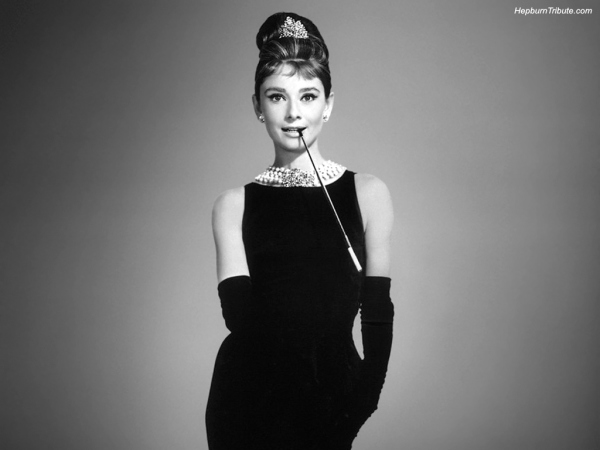
The 1950s was a vital time to solidify the connection between fashion and cinema and make them “mutually supporting channels of exploitation”. Designers became increasingly important for Hollywood and stars. The "little black dress", created by Coco Chanel, was immortalized in Audrey Hepburn's body. The mixture of her youthful air with the classic haute couture clothes symbolizes the transformation that began to occur in that period. It also solidifies the relationship between cinema and fashion as catalysts for each other’s success. Hepburn was synonymous with class and beauty for many generations. Her importance for the fashion industry can be seen through the survival of her image as an icon even after her death, in commercials (such as the Galaxy chocolate commercial below).

Audrey Hepburn in Breakfast at Tiffany's (1961)

Compared to the divas that preceded her, such as Rita Hayworth and Marilyn Monroe, that had lush bodies and seductive looks, Audrey meant a break for this pattern of beauty. Audrey not only presented a different look but also an ambiguous one that had never been portrayed in film before. At the same time that she had a fragile, delicate and feminine air, she was also the maturation of masculine features that undermined feminity itself. By challenging the typical mammary woman look, she represented hope, inspiration and freedom for many women of the time. This put her in another level than the other stars because it pushed forward an idea of an independent woman that refused to be molded by the studio. She represented the feminine space but with certain masculine aspects that gave her an individualistic appeal.
Marilyn Monroe and Audrey Hepburn
 Audrey became an immortal icon because she represents the exact opposite of all that Hollywood used to symbolize: scandals, exaggeration and vulgarity. With a fragile, shy and delicate image, she fled from beauty stereotypes of the time. As she was very skinny, she did not display the curves or latent sexuality icons of the time. She contrasted with the model woman of curvilinear forms that prevailed in the 50's as sex symbols like Marilyn Monroe, Kim Novak and Jane Mansfield. There was something that replaced it all: class. With completely opposite physical premises to the fatal woman, Audrey imposed a standard of beauty in which elegance prevailed everything. Which is why she arrived as an event that lodged an alternative type of female star.


Her unidentifiable origin, which many times made her seem American, European, neither and both – all at the same time, is also what allows her to arrive as an event. She represented a type of ambiguous nationality that fit an important time in the American economy; the consumerist boom. She propagated the rise of transatlantic tourism and represented the europization of Hollywood. This period was a vital time to calcify the cinema’s role in promoting tourism.

The most interesting thing is that Audrey’s star persona and actual persona are very difficult to separate for many fans, including myself. Her off-screen independent personality many times matches the characters that she played in her movies. As Brown pointed out her”faults as a real person and limitations as an actress” are what gives her status as an event. In the movie, Roman Holiday (1953), Audrey Hepburn plays a princess, Ann, who flees in search of adventure and a different life from the predictable boring one that she lived. Hepburn appears with short hair, demonstrating a radical change in the feminine ideal of the 50s to the “modern” independent woman of the 60s. Unlike the majority of today's actresses who shed rivers of tears to show sadness, give hot kisses to demonstrate passion, or big smiles to show joy, Audrey needed a lot less to convey the same feelings, just a look.

Sunday, March 1, 2015

Jennica Core Blog Post #4 - Hepburn and Monroe; Early Feminists, yet Staunch Conformists

Both Audrey Hepburn and Marilyn Monroe performed the majority of their high profile film roles in the 1950’s. However, what is perhaps most unique is how completely different these two actresses were and the roles in which they played. During a time in which ideas about feminism and women’s independence were at a low in the 1900’s, these women both challenged notions of traditional femininity in what appeared as completely different ways that were perhaps not so different after all.
Although Monroe’s “dumb blonde” persona often clouds the way one analyzes her star quality, it is important to note that her “blondeness”, makes her seem that she is “natural and untouched.” This naturalness is what leads to her appeal because she is seen as so pure. Similarly, while a completely different kind of natural, Audrey Hepburn’s popularity is due to her natural European look, a look that Fred Astaire’s characters will call “funny” yet in actuality it is a different type of beauty that Americans looked to a tap into a more “exotic” yet completely natural look.  The “natural” and “untouched” look both these women embodied through their appearance not only made them nostalgic commodities as they resembled something pure during a time in which Europe and other nations were in complete disarray after the war, but they also are interesting, there is something about these women that challenges traditional femininity through this naturalness. Hepburn’s natural tomboyish appearance can be seen as a way of illuminating both “masculine and feminine qualities” while Monroe uses her natural appearance to tap into the idea of female sexuality and female sexual exploration as natural defying traditional assumptions that female appearance is strictly for male consumption.
Monroe illuminating female desirability yet contradicting this by exploring the notion of female desires and sexuality as she caresses herself not allowing the men to touch her, illuminating the notion that her sexuality is for her own pleasure. 
There is no question that Hepburn clearly paves the way in terms of progressing feminine values when we think of several of her film roles. The first time we see her in Funny Face she is not only working (out of the domestic sphere) but she is also working at a book store illustrating a hobby that relies on intelligence, and knowledge both attributes that were often thought to be kept in the masculine sphere. Already her ambiguous looks parallel her ambiguous personality in which her values, and attributes also align with traditional masculine characteristics setting her apart from the other females of her time. On the contrary, Monroe is typically seen as carefully navigating the world of femininity to maintain her desirability to men staying clear of anything far from intelligence (hence her dumb blondness) that she believed would take away from her innocence and desirability. However, the way in which Monroe plays up femininity and female sexuality is not only purely for the consumption of males, she is careful walks that ambiguous line to maintain male attraction but at the same time her comfort with her sexuality can also be seen as a way for her to express her own sexual desires empowering herself and other women during a time in which sexual desires were only thought to be for males. Her performance in the song Diamonds are a Girls Best Friend exemplify her desirability however, the difficulty the men have getting their hands on her illustrate the concept that her sexuality is also for her own consumption not purely others. Monroe is very confortable touching herself which is clearly evident by her performance in this song and she was known to be often seen “caressing herself” which not only feeds the idea of Monroe as a sex object but more importantly illuminates Monroe’s confidence with her own sexuality and her ability to be in touch with her own sexual desires. The type of femininity Audrey Hepburn exemplifies is one that “can include some masculinity” which is generally the way in which female characters continue to challenge stereotypical representations of femininity today. However, while we often disregard Monroe for being completely contrary to anything representative of female progression, clearly we might not be able to discount her quite so quickly as she does challenge femininity in particular raising awareness for female sexuality an extremely important topic that is often not touched upon.

Hepburn conforming to her femininity
Hepburn contradicting traditional notions of femininity


However, on the opposing side the way both these women set a precedent for female progression they also contradict the elements of feminist values that many of their performances enlighten thus making it difficult for audiences to see these women as star vehicles for change because of the elements of conformity they still exhibit. Hepburn is though to “embody not one thing or the other, but both at once,” which is particularly important when we think about how one element of her star image contradicts and essentially overrides the other.  In Funny Face she starts off as the unique independent intelligent girl in the bookstore challenging all notions of traditional femininity however, shortly after her resistance to the fashion industry she conforms and appears seemingly seduced by not only her “beauty” but the possibilities such as romance that have opened up to her once she has allowed herself to become more feminine. This covers up the progressive elements of her character at the beginning of the film which illustrates how her troubles will be resolved when she conforms which is what she does and she does appear to be happy at the end. Similarly, while Monroe may intend to raise awareness about female sexuality, it is often quite difficult to read past the overly sexual body language and clothing that seemingly work to increase her desirability to her male counterparts. Thus while both of the actresses display elements that challenge traditional representations of femininity, the way in which they too conform both in their personal and professional lives remaining concerned about their own presentation of femininity counteract the various progressive elements that they bring to the table in their performances.