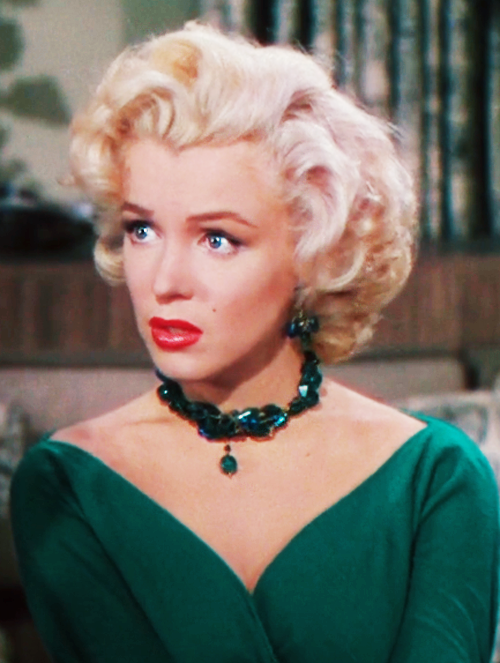
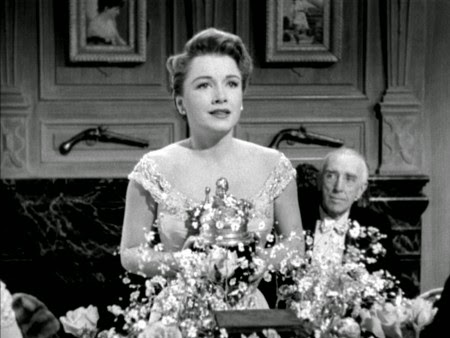
Showing posts with label Joseph. Show all posts

Friday, April 24, 2015

Sofia Vergara, bound to her body (supplemental post)

When I was walking to class, I saw this poster for Sofia Vergara's next movie, and was immediately reminded of our discussion in class about Latina actresses being bound to their bodies and always described in terms of being sexy and hot/spicy/caliente.


Obviously this continues to be true for Vergara in this movie with her curves the focus of the marketing and the word "Hot" from the film's title literally emblazoned over her body.

This inspired me to look and see how often Vergara is described in the "climate-confused" terms associated with Latina stars. The answer: an awful lot. For example, these three magazines annoit her with descriptions as diverse as "Hot and Hilarious," "Caliente," and "Caliente caliente."


Even when Vanity Fair seemingly focuses on her success and business acumen, they link it to her body: "TV's Top-Paid Actress Is Building Her Own Bombshell Empire. Va-va-Vergara!"


Obviously the spicy latin trope continues to thrive in our modern media. For Sofia Vergara, whether the topic is her newest film, her style, her place among Latina actresses, her TV work, or her business, it is important to also mention that she is sexy.   


Friday, April 17, 2015

Rom Coms are not a safe place to defy gender norms... (Supplemental)


Out of Sight is a very playful romantic comedy with an exciting criminal element, but in watching the movie in class, I noticed something interesting. Five characters are killed (up to the point we've watched). We don't know anything about three of them. We know exactly one thing about the other two: they are queer. And in a movie about heteronormative love, maybe queerness is the most abhorrent thing a character can be.


The first two deaths in the film occur during the prison break. Following Chino and Lulu, another pair of prisoners come through the hole and are gunned down before Jack (Clooney) emerges. Those two prisoners took a lot of bullets, so are presumably dead, but they are dehumanized for the audience. We are kept in long shot where we can't identify with them, and to drive this distance home, their faces are literally obscured by dirt.

Then Lulu is killed off camera at the hobo camp. We hear about it* and see him zipped into a body bag. This is a character we've actually met, although he is entirely defined in relationship to Chino as the effeminate half of the prison couple. One could argue that homophobia and not coincidence explains effeminate Lulu being murdered while Chino--who meets heternormative standards if not being actually heterosexual, is further developed as a character and is arrested instead of killed.


The next two deaths also happen off screen when Snoop leads the attack on the wayward crack dealer who happens to be a cross dresser. He is killed for dealing on his own, but the film makes sure the audience gets that he is abnormal. In dialogue Snoop refers to him as "this cross-
 dressin' nigga named Eddie Solomon" and in the shot of his body, Eddie is dressed in female clothing. The other body at the scene has his face blown off, preventing us from identifying with him in much the same way as the dirt on the slain prisoners.

So to make the audience okay with deaths in this rom com--to keep it light enough, the fallen character must either be obscured to prevent the audience from relating with him or her as a person, or he must be clearly identified with the taboo of existing outside of a conventional gender identity.

As breaking gender conventions was and continues to be a taboo, that alone could be enough to explain the film using this tactic to dehumanize the characters that are killed. But on top of the taboo, this is a film about a man and a woman finding the love and heterosexual relationship that is the ultimate fulfillment of their existence. Is it possible that this contrasting message of the film heightens the devaluing of the queer characters?


Monday, April 13, 2015

The treatment of the "queens" in TRUTH OR DARE (Core)

In Madonna's Truth or Dare, I was disturbed by the way the gay back up dancers were portrayed, and they way they were treated/ talked about/ talked to. Arguments can be made that this was a different time, earlier in the gay rights movement, but this is a film about a pop star who tapped into her gay icon status, and who is on one hand performing a show dedicated to raising support and awareness about the AIDS crisis, and in the same night treating her gay employees like they are less important or to be taken less seriously than other humans. She explains to Oliver that he should ignore them, saying: "Oliver, look. There are always going to be queens on the rag. You have to expect that of me." Not only does Madonna diminish them in this speech, she also implies a sense of possession over them. They are an element of the decor of her life. 


In fact, Madonna's superiority toward these men established as soon as she introduces them. She explains, "I think I have unconsciously chosen people that are emotionally crippled in some way. Or who need mothering in some way. Because I think it comes natural to me." She puts herself above them, and diminishes them en masse as incomplete, stunted. Hooks notes this moment and goes further, "Madonna describes them as "emotional cripples"....and of course in the contest of the film this description seems borne out by the way they allow her to dominate, exploit, and humiliate them."


The readings also point out the juxtaposition of Oliver's homophobic speech against the footage of the other dancers at the gay rights march. During images of these proud gay men trying to stand up for themselves and expressing their worth and their individuality, Oliver diminishes this exact kind of open self expression on Luis's part, saying:


"Oh, my God. You know what else I hate? Have you ever seen Luis walk in just underwear in front of a whole bunch of people? Just walk around in bikini, just underwear. Don't have no respect for these people. We know that he's a fag, or gay, or whatever you want to call it, but you don't have to show it to everybody."

But he does have to show it to everyone--not hiding is a major point of queer equality. To my mind and my experience of being a queer person pushing back against oppressive forces in the world, Luis's scanty clothes are akin to Cvetkovich's description of Divine's drag as "an aggressive reclamation of a body otherwise subject to freak status" and as such such be respected, not ridiculed. Still, the homophobia of the situation goes beyond Oliver's words. While Oliver's speech undermines the gay dancers' attempts to reclaim identity and power at that march, it's the actions of the rest of the tour that dismisses the dancers' bid for rights. Noticeably, every other person on tour--from Madonna to Sharon--is absent. These men are a small, vulnerable group. They have no allies. They and their cause are not considered seriously by the dozens of other characters we've met in this film. 


There is an argument to be made that it isn't about gay--or color, or money--but that Madonna simply only cares about herself. But this isn't true; Madonna doesn't dismiss EVERYONE around her. She treats Sandra Bernhard, Pedro Almodovar, and others as equals. And in fact, Warren Beatty, a white man and thus the only person who holds a privilege status higher than hers allowed in her life, is the only person put in a position to read Madonna. 


Monday, March 2, 2015

Marilyn Monroe, Audrey Hepburn, and Staring at White Women (Core)

Audrey Hepburn in Funny Face proves an interesting contrast to Marilyn Monroe in Gentlemen Prefer Blondes. The movies actually share a great deal of similarities; in no particular order:

- they both involve a trip to Paris
- they are both musical rom coms about a woman who might not get the one man she loves
- they both feature a buddy element
- Monroe and Hepburn both play women who are social outliers
- both Hepburn and Monroe get a featured dance number
- both involve a song and dance to escape through a crowd (at a cafe in Gentlemen Prefer Blondes and at the professor's house in Funny Face)
- they both tell the story of a woman who's true value is recognized and validated at the end via marriage

HOWEVER, despite being very similar films, the treatment of Monroe and Hepburn is night and day.

Hepburn's Jo is an intellectual. She is a quality girl (literally dubbed so in the film). She is classy, sophisticated, and unconcerned with materialism. She is presented in style as elegant, delicate, ladylike, high brow, etc.

Monroe's Lorelei is a dumb blonde showgirl. She is a quality-less girl--she grew up poor in Little Rock, she is alluded to having a shameful past (not a virgin), and her fiance's father is actively against her as a daughter-in-law. She is classless, unsophisticated, and a gold digger obsessed with diamonds. She is presented in style as voluptuous, sexy, flashy, immodest, etc.

When Monroe dances in Gentlemen Prefer Blondes, it is all wiggles and T&A. In Funny Face Hepburn is given a cerebral, modern-style dance.


And in relation to our reading in Heavenly Bodies, Monroe's "vaginal" (57) body and dress are once again opposite to Hepburn's much more structured, contained wardrobed.


However, in this same reading, we can find the thing that links both characters:

"The smart woman will keep herself desireable. It is her duty to herself to be feminine and desirable at all times in the eyes of the opposite sex." (Heavenly Bodies, 42)

Both Lorelei Lee and Jo Stockton are on a quest to be viewed by their respective man as the ideal--the object to be desired. They both are literally put on stages as a showgirl and model respectively to be gazed upon. And they both succeed, in very different ways and on very different terms, in entrapping a man by having him look at her enough. 

In the reading the idea of being an object of men's gaze and of desire gets more specific in a way which I think can connect these characters further and even extend that connection to other representations of femininity in Hollywood and beyond. Heavenly Bodies describes how "the white woman is offered as the most highly prized possession of the white man, and the envy of all other races" (HB, 43). Certainly the platinum blonde Monroe and the British waif Hepburn are White Goddesses. We have seen the white goddess to some degree in all the films, but the most pronounced of all was in The Sheik. In that film, Lady Diana Mayo's whiteness attracts not only Valentino but every ethnic man in the desert! 


But this white goddess as the object of gaze has an even more unabashed example. The readings mentioned a quote from Bus Stop, "Look at her gleaming there so pale and white," which immediately reminded me of Oscar Wilde's Salome.

Salome may be the greatest example of a female character celebrated for her whiteness ("like a the shadow of a white rose in a mirror of silver") and existing only to be gazed upon by men (in this case Harod and The Young Syrian). But in Wilde's Salome, the young princess turns this around, and turns Iokanaan into her obsessive object of desire by gazing upon him and becoming enthralled with HIS whiteness ("I am amorous of thy body, Iokanaan! Thy body is white like the lilies of the field that the mower hath never mowed.") 


Of course, in the play, when Salome takes on the sexual authority to objectify a man, she then must have that man beheaded, make out with the severed head, and then be killed herself as "monstrous." So perhaps Jo, Lorelei, and Lady Diana were wise to quit while they were ahead...

Monday, February 23, 2015

Gentlemen Prefer Blondes as the Birth of the Complete Monroe Persona (supplemental)

We've talked a lot in class about Marilyn Monroe's star persona mitigating sexiness with childish innocence, and I think one can argue that Gentlemen Prefer Blondes marks the moment when that persona gelled for Monroe, for the studio, and for audiences. Dyer cites Monroe's Lorelei Lee as a moment when persona undermined the character as written, but I think it's a moment when the stars aligned to show what this Monroe girl COULD potentially be, and everything else too a back seat.

Prior to Gentlemen Prefer Blondes, Monroe did several roles that were sexy but more mercenary, such as All About Eve, Don't Bother to Knock, and Niagra, but Gentlemen Prefer Blondes is the first time we see the innocent sexy girl that would charm America for generations.

All About Eve shows Marilyn as an ambitious, manipulative aspiring actress ready to use her sex to get ahead. One could argue she's on the Eve Harrington track but without the brains. Here Monroe has elements of her signature "dumb blonde" image, but not the iconic sexy/innocent paradigm.

Miss Casswell in All About Eve (1950) has an agenda for her sexiness...

In Don't Bother to Knock, Monroe is actually a villain. She lies, seduces, abuses a child, and finally gets arrested. Monroe has the sexiness, but not the innocence...

Nell in Don't Bother to Knock (1952) is sexy but unhinged...

Finally in Niagra--immediately before Gentlemen Prefer Blondes, Monroe appears at her most villainous. She's a cruel wife, she's an adulterous, and she's planning to be be a murderer. Important to note in this, her villainy is directly related to her sexiness and how she uses it as a weapon.

 
Rose in Niagra (1953) is a sexy monster...


It seems that the powers that be were setting Monroe up to be a beautiful, tempting bad girl up to this point. But then Gentlemen Prefer Blondes happened, and audiences finally see the epitome of the classic Marilyn Monroe persona. This film definitely shows her sexy innocence incarnate, and it kicked off a trend of more films designed to vehicle Monroe in this kind of character. I think it's safe to say that Gentlemen Prefer Blondes launched the Marilyn we know and remember.


Gentlemen Prefer Blondes (1953)

How to Marry a Millionaire (1953)

There's No Business like Show Business (1954)

Seven Year Itch (1955)

The Prince and the Showgirl (1957)

Some Like It Hot (1959)


Monday, February 16, 2015

Was Marilyn Monroe's Femininity a Communist Threat to America? (core)

Reading Steven Cohan's appraisal of femininity being controlled and contained by marriage, his idea that too much sexual femininity was akin to communisms threat to America, and then the account of Hitchcock's two types of blondes, I immediately started thinking hard about Marilyn Monroe. She is literally called out by Hitchcock as the other kind of blonde, not a drawing room blonde. As the other kind of blonde, is she actually a threat to restorative 50s matrimony as described in Cohan's text? 


 Marilyn's devious side eye down the aisle. Does he know the mistake he's making? Mwahaha!

Surprisingly few of Marilyn's films involve her being sexually "contained" by marriage to a man. Starting with the film we've already seen of hers in class, in All About Eve Marilyn is presented as a mercenary aspiring actress whom no one takes seriously. She arrives on the arm of one of the villains and is sent to seduce a producer she's not interested in--no hint of marriage anywhere in this character's (bleak) future.

Only a few of her films end in a marriage, and in those cases it's not the conventional, healthy-for-the-country marriage described by Cohan. In Gentlemen Prefer Blondes, she finally gets engaged but to a man who is incredibly weak and passive--not a candidate for the re-masculinization required to defeat Communism. In There's No Business Like Show Business the major obstacle to her marriage is that she's too sexy--something so disturbing that it leads an otherwise good natured song and down a dark road that includes jail--also not a candidate for shoring up America's resolve. In Some Like It Hot she marries a man who has been in drag for most of the movie--say it with me: not a good potential anti-Communist warrior. Meanwhile there is no wedding for her in Don't Bother to Knock, Niagra, or The Prince and the Showgirl.

Others films of hers take this even further. In Bus Stop she finally convinces the man who keeps proposing to her not to try to rope her into marriage when she confesses that she isn't a nice girl--she's had too many boyfriends. In The Seven Year Itch she's an active threat to marriage--a potential affair for an otherwise happy husband. Finally in The Misfits she starts the film already expelled from marriage, a divorcee.

Not a "Drawing Room Blonde"

Obviously this common denominator is part of her star image--she's incredibly sexy, she's a little bit of a bad girl, something of an underdog, but she's got a great heart. But is that the star image put upon her because she's not a "drawing room blond" and thus not the right thing for American marriage?


If Marilyn Monroe had been cast as Eve, would Cary Grant have been killed and would the Communists have won?


(Of course, Marilyn Monroe's ACTUAL marriages weren't successful or beneficial to her husbands. Perhaps that's an example of a star's real life overlapping their star image.)


Monday, February 2, 2015

Now, Voyager sneaks elements of attraction into its Narrative (Core)

Watching Now, Voyager I was struck by how--despite being a distinctly narrative film--there are definite moments of attraction slipped in. The most blatant of these being the entrance into Rio Harbor. The film basically stops the narrative to show the audience the famous sites.

The bigger element of attraction was more subtle, however. The fashion, which we were told to look out for, is definitely displayed and used as attraction above and beyond the narrative of the film. I can easily see these gowns being sold in Macys as mentioned in our reading, and I even found some staged photographs of Bette Davis in her gowns which are not stills from the film Perhaps they were advertisements for the gowns themselves?


According to our reading, using fashion as attraction not only exists beyond the narrative, it could also be detrimental to a narrative: "the aesthetic consequence of woman as spectacle in film is a tension in films centered on glamorous women stars between the narrative (we want to know what happens next) and the spectacle (we want to stop and look at the woman" (Stars, 51). It seems that in this case, Now, Voyager seeks to solve the problem by making the fashion escalate in time with the character's growth into glamour. Even if we are paused from wanting to "know what happens next," perhaps we make up for that by wanting to know what's WORN next.

And the fashion as attraction worked on me. I was enthralled with the clothing, especially the big shoulders and décolletage.


I was so much invested, in fact, that like the recurring example of buying a star's lipstick, I had to try this look for myself.


So thanks, Now, Voyager, for giving me a taste of attraction with the narrative main course, and thank you for helping me decide what to wear on Saturday night.


Friday, January 23, 2015

Wait, Agnes Ayres was a popular star? (A supplemental post)

I found The Sheik so extraordinarily offensive that I was compelled to do some casual online research. While looking deeper into this objectionable film, I found something that shocked me: Agnes Ayres was famous!


I knew Rudolf Valentino was a big star, but Agnes Ayres shares billing with him, and even has versions of the movie poster dedicated featuring just her image.


But look at this woman. She looks like she didn't know when the picture was going to be taken. She looks like one of the dowdy girls they saw when they were trying to find Clara Bow. And I don't mean to pick on her for not being "glamorous." What I mean is that I don't see (and didn't see in The Sheik) any of what we're discussing in class as "charisma."


I can't imagine she would be a star if she were born today, so what made her a star in the 1920s? What did she have that appealed to that decade?

Biographically Agnes Ayres was a midwestern girl who got her first break when silent film star Alice Joyce discovered her. Her career was bolstered by Jesse Lasky, her lover and the founder of Paramount Pictures. But this assistance from established power players doesn't seem enough to explain stardom; she must have had something to offer to stay in the limelight. We can all think of examples of would-be stars that Hollywood tried to push onto America, but the consumption side just wasn't there and so stardom never sticks.

So I went back to the contradiction idea we've discussed in class and speculated what contradiction Agnes Ayres could embody for the post WWI world. The great social divisions I can think of this time period are liberalization vs. tradition and the question of women's expanding roles in society. Looking at Ayres' character in The Sheik, I think Ayres may have answered the latter issue. Lady Diana Mayo isn't quite a flapper, although she certainly heralds those ideas of female independence and good times, and yet she is a Lady (with a capital L). Her sense of adventure (like a flapper) seems unrelated to men or sex (unlike a flapper). Maybe this role in The Sheik points to a socially relevant fault line that Ayres was able to straddle for audiences?

Ayres was also known as "the O. Henry Girl" because she played so many heroines in adaptations of O. Henry shorts. As O. Henry was a writer with his finger on the pulse of the society problems of the day, I consider this further evidence that Ayres draw came in part from social relevance.

I propose that Agnes Ayres lived on a plane that was very resonant in the 1920s--social freedom vs. moral respectability.

Does anyone have any other theories?


Monday, January 19, 2015

Stardom as captured by Joseph L. Mankiewicz (Core)

In reading from Richard Dyer's Stars, I was fascinated by how much of the theory so easily applied to the world (and the women) of All About Eve. In Mankiewicz's fabulous film, we are treated to not one but two great stars, one in her natural habitat and one in the act of being created.


The section regarding stars being the product of production or consumption particularly resonated for me in relation to All About Eve. In All About Eve we see both of these functions. First we meet Margo as a star, and we see that she has been a commodity long enough that her status now relies on a symbiosis between production and consumption. She is hired by productions because she puts butts in seats (consumption); Lloyd Richards confirms that Margo has been hired for his plays in the past for this very reason in his speech to Karen: "for once to write something and have it realized completely. For once not to compromise." But Margo also needs to continue to do plays to maintain her status (production), as indicated when she decides to de-emphasize her career and rejoices that she finally won't "HAVE to play parts [she's] too old for" anymore.


Meanwhile Eve Harrington's navigation to stardom requires her to secure both production and consumption. To secure consumption, she employs publicity first by securing critics at her understudy performance, then through Addison DeWitt's column, and finally by the time she wins the Sarah Siddons awards, we are told "she's been profiled, covered, revealed, reported..." Consumption alone is not enough, though--not at first. She needs production; she needs a show. In this case she needs Cora, and it isn't until she gets that part that she is truly set up to become a star.


For the women of All About Eve, it takes more than just production or consumption. Mankiewicz's script holds up as glorious truth the idea which Dyer calls "not intellectually very respectable" that stars can only hang in the constellations because they are exceptional. What Dyer talks of as talent, Addison DeWitt describes as a "moment of revelation." We are told in no uncertain terms that both Margo Channing and Eve Harrington have this "music and fire" which is essential to making the production and the consumption stick.


All About Eve also delves into each of these women's persona/ star image. We see that the key to Eve's success both on and off stage is pinned on her sincerity (similar, I imagine, to that sincerity that made Kate Smith's bond sales so lucrative). Margo's image is more complicated, fierier. From Karen's line, "It's about time Margo realized that what's attractive on stage need not necessarily be attractive off," we know that she has quite a history of on stage persona, and we know that she has trouble leaving it behind. In fact, Margo's inability to decipher between her persona and her person recurs throughout the film--she asks Lloyd to "let her in on [herself]" and wonders to Karen what will happen between herself and Bill in ten years when Margo Channing "cease[s] to exist."


So it seems that Richard Dyer and Joseph Mankiewicz agree on the logistics of being a star, although Mankiewicz's slant is much more deliciously diabolical.